
English verb tenses help you show when something happens and how you want the listener to understand the action. The tense can tell us whether something is routine, temporary, finished, still relevant now, already completed before another event or expected to continue into the future.
English is commonly taught through 12 main tense forms. They are easier to understand when you organise them into four families: simple, continuous, perfect and perfect continuous.
Why do English verb tenses matter?
The difference between two tenses is often a difference in meaning, not simply a different verb ending. Compare I work in Paris with I’m working in Paris. The first sounds like a regular or permanent situation. The second suggests that the situation is current and possibly temporary.
- Time: place an action in the past, present or future.
- Progress: show that an action is or was in progress.
- Result: connect a completed action to another point in time.
- Duration: show how long an activity has continued.
This matters in conversation, writing, professional English and exams because choosing the wrong tense can change the message or make a sentence harder to understand.
The 12 English verb tenses: complete chart
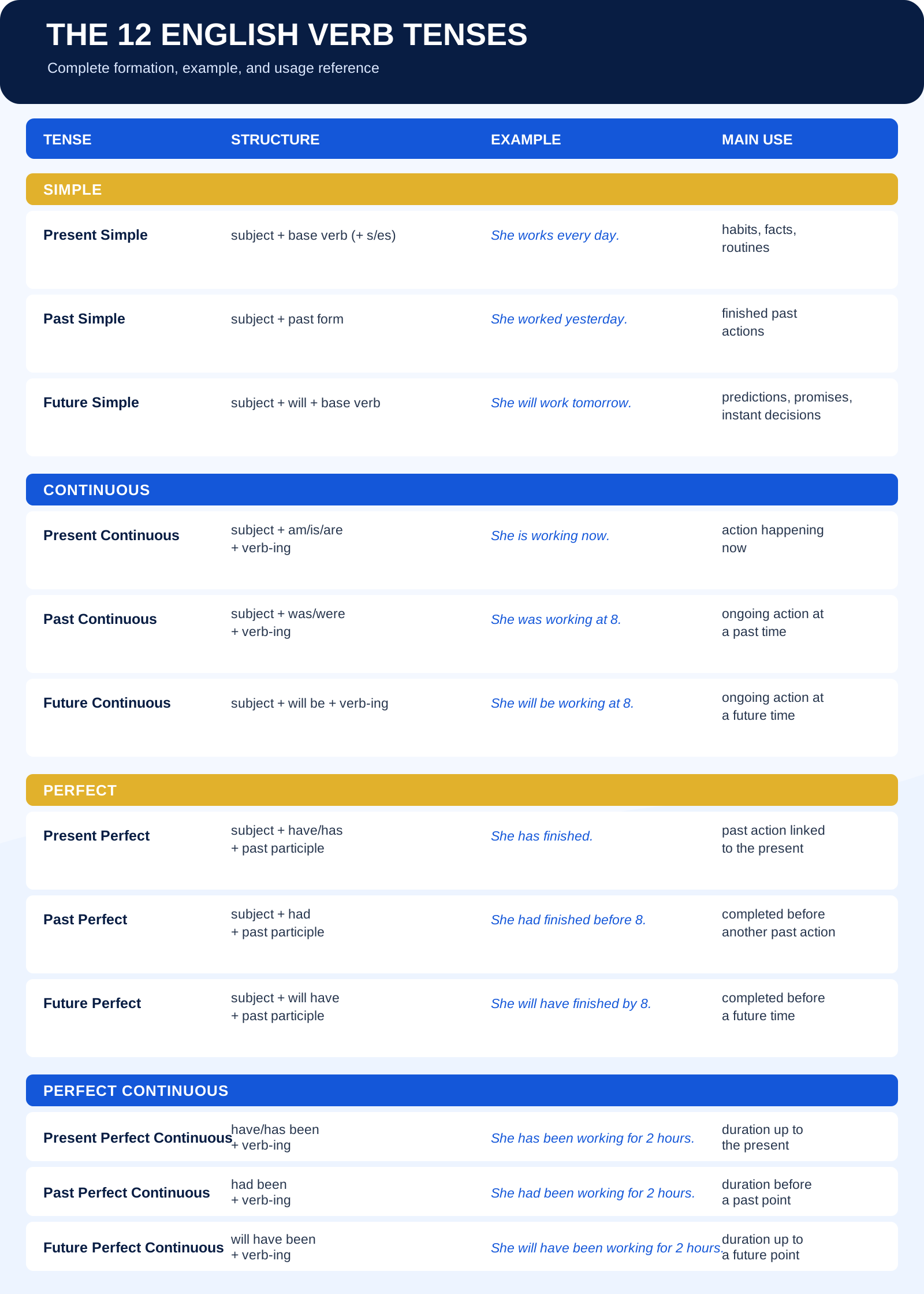
The table below uses the verb work so you can compare the structure of all 12 tense forms.
| Tense | Structure | Example | Main idea |
|---|---|---|---|
| Present simple | base verb / verb + s | I work. | habits, facts, regular situations |
| Present continuous | am/is/are + -ing | I am working. | now, temporary situations |
| Present perfect | have/has + past participle | I have worked. | past connected to now |
| Present perfect continuous | have/has been + -ing | I have been working. | duration up to now |
| Past simple | past form | I worked. | finished past action |
| Past continuous | was/were + -ing | I was working. | action in progress in the past |
| Past perfect | had + past participle | I had worked. | earlier past action |
| Past perfect continuous | had been + -ing | I had been working. | duration before a past point |
| Future simple | will + base verb | I will work. | decision, promise, prediction |
| Future continuous | will be + -ing | I will be working. | action in progress in the future |
| Future perfect | will have + past participle | I will have worked. | completed before a future point |
| Future perfect continuous | will have been + -ing | I will have been working. | duration up to a future point |
Simple tenses: present, past and future
Present simple
Use the present simple for habits, routines, facts, regular situations and states. It often appears with words such as usually, often, sometimes, every day and never.
Past simple
Use the past simple for a finished action in a finished past time. Time markers such as yesterday, last week, two days ago and in 2025 often make the choice clear.
Future simple with will
Use will for meanings that include spontaneous decisions, promises and predictions.

Continuous tenses: actions in progress
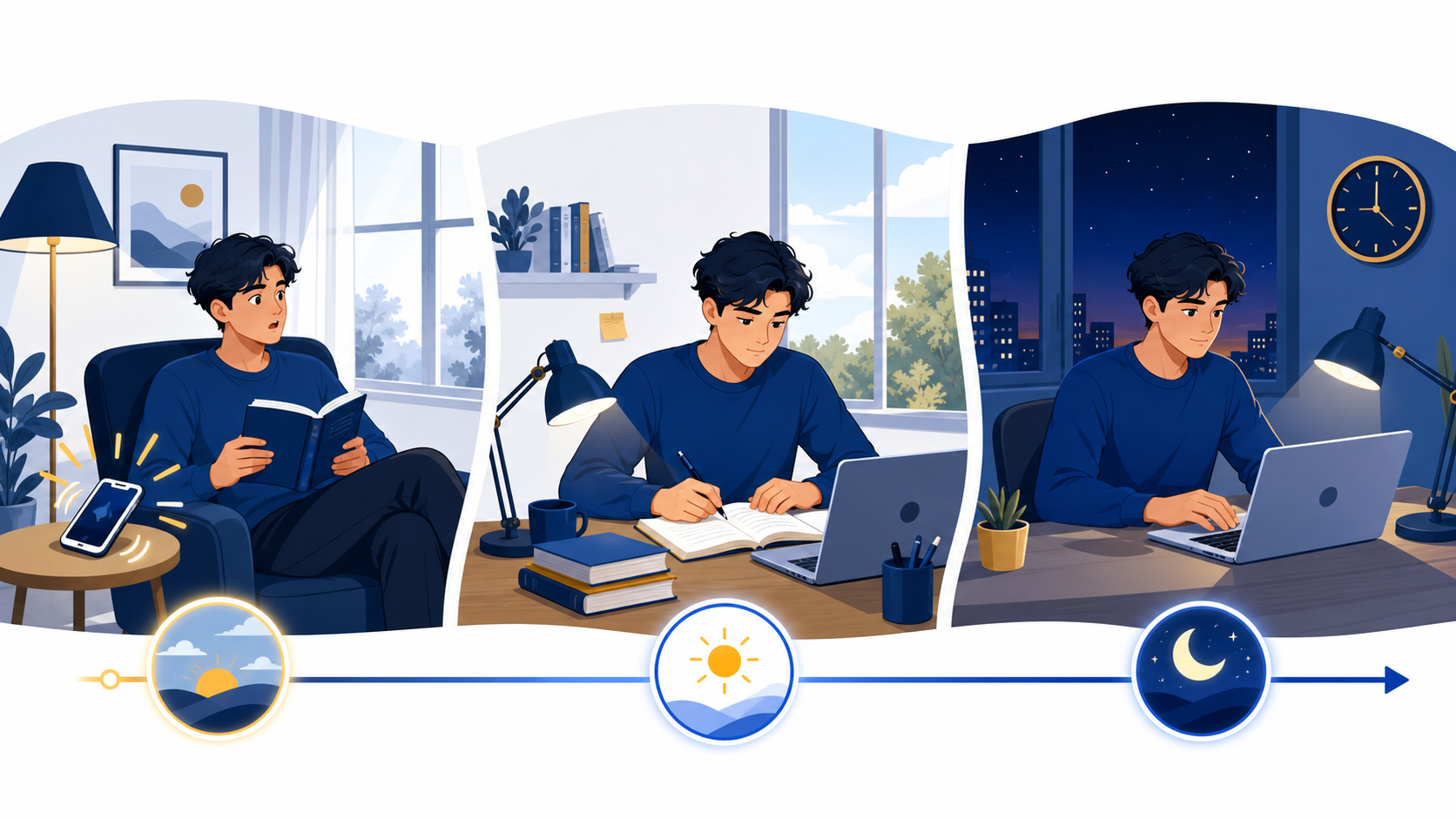
Continuous forms use be plus the main verb in -ing. They focus on an activity as something in progress rather than simply presenting it as a fact or completed event.
Present continuous
Use it for something happening now, around now, or for a temporary situation. It can also describe a future arrangement that has already been organised.
Past continuous
Use it for an action that was in progress at a particular moment in the past. It often appears together with the past simple when one event interrupts another.
Future continuous
Use it for an action that will be in progress at a particular future time.
Perfect tenses: connecting two points in time
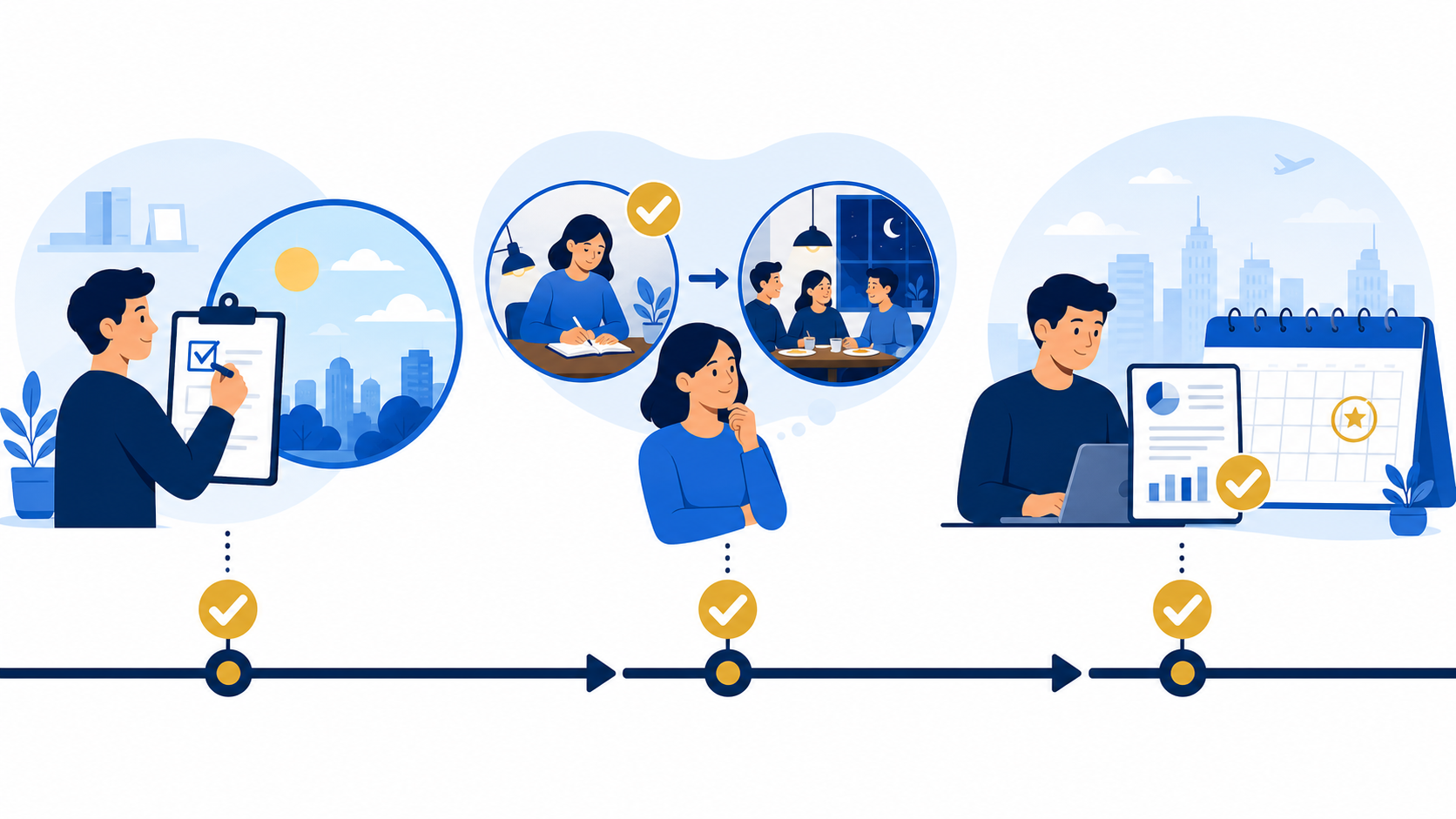
Perfect forms use have plus the past participle. Their main job is to connect one time with another or to emphasise a completed result.
Present perfect
The present perfect connects the past with the present. Use it for experiences, recent results and situations that began in the past and are still true now.
Past perfect
The past perfect makes the order of two past events clear by showing that one action happened before another.
Future perfect
The future perfect shows that something will be completed before a specific point in the future.
Perfect continuous tenses: focus on duration
Perfect continuous forms combine the connection between two points in time with an emphasis on the activity or its duration. They use been followed by the main verb in -ing.

How to choose the correct English tense
If you are unsure which tense to use, do not begin with the grammar table. Begin with the meaning.
- When does the action happen? Past, present or future?
- Is it a habit, fact or simple event? A simple tense is often the best choice.
- Is the action in progress? Consider a continuous form.
- Does one time connect to another? A perfect form may be needed.
- Is the duration or continuing activity important? Consider a perfect continuous form.
I work here. — a regular or permanent situation.
I’m working here this summer. — a temporary situation.
I’ve worked here since 2024. — started in the past and still true now.
I’ve been working here all morning. — the duration/activity is the focus.
Commonly confused English tenses
Past simple vs present perfect
This is one of the most common problem areas for B1 and B2 learners. Use the past simple when the past time is finished or clearly stated. Use the present perfect when the exact past time is not the focus or when the result still matters now.
I sent the email yesterday.
Finished action + finished past time.
I’ve sent the email.
The result matters now.
Present simple vs present continuous
Use the present simple for what normally happens and the present continuous for what is happening now or temporarily.
I usually work in the office.
I’m working from home today.
Will vs going to
Both can refer to the future, but the intention behind them is often different. Going to commonly presents a plan or intention already decided, while will is natural for a decision made at the moment of speaking.
I’m going to take Linguaskill next month. — existing plan.
I’ll answer the phone. — decision made now.
Common English tense mistakes to avoid
| Incorrect | Correct | Rule |
|---|---|---|
| She didn’t went. | She didn’t go. | Use the base verb after did/didn’t. |
| I have seen him yesterday. | I saw him yesterday. | Use past simple with a finished past time. |
| I work right now. | I’m working right now. | Use a continuous form for an action in progress. |
| He work every Saturday. | He works every Saturday. | Add -s in the third-person singular present simple. |
| I am here since Monday. | I have been here since Monday. | Use the present perfect for a state that began in the past and continues now. |
English verb tenses for TOEIC, Bright and Linguaskill
Verb tenses matter in exam preparation because time markers and sentence context often tell you which form is required. You need to recognise those signals quickly rather than translating every word.
TOEIC verb tenses
In TOEIC preparation, tense questions are especially relevant to Reading Parts 5 and 6. Watch for time markers such as currently, yesterday, since, for, already, next week and by Friday. The surrounding clause can also show whether one past action happened before another.
Bright English
In Bright English preparation, verb tense accuracy helps you process workplace and everyday situations quickly. Pay attention to the relationship between the time marker, the subject and the main verb.
Linguaskill
In Linguaskill preparation, tense control supports reading and listening comprehension and becomes important when producing clear spoken or written English at B1, B2 and higher CEFR levels.
How to practise English verb tenses effectively
Regular short practice is usually more useful than trying to memorise every tense in one long session. Connect each tense to a real situation and compare forms that learners commonly confuse.
- Choose one tense or one tense comparison.
- Write three sentences that are true for you.
- Notice the tense when you read or listen to English.
- Transform one sentence into past, present and future forms.
- Complete short grammar exercises and explain each answer.
- Review mistakes instead of only recording the score.
- Return to the same tense several days later.

If you need a broader review of sentence structure, modals, articles and prepositions, continue with the English Grammar Guide.
Learn → Practice → Correct
Test your English and put the tenses into practice
Check your current level, identify the grammar patterns that need work and continue with structured preparation for TOEIC, Bright English or Linguaskill.